The following article highlights five highly regarded prong training collars designed to aid dog training while emphasizing safety and humane handling. Each section includes key features, fit considerations, and practical usage tips to help American pet owners choose the right option for their dog’s size and temperament. A concise buying guide at the end covers sizing, materials, and training objectives to compare across models.
Summary of Selected Products
- Herm Sprenger Prong Dog Training Collar, 22in x 3.0mm (Neck Size up to 18in) – Germany
- Safiman Prong Collar for Dogs – Adjustable with Quick Release Buckle
- Monstoyo Martingale No Pull Collar – Nylon with Inner Stainless Steel
- Supet Prong Collar for Dogs – Adjustable, Quick Release, Extra Links
- Herm Sprenger Dog Training Prong Collar with Quick Release ClicLock – Up to 20″ Neck
Herm Sprenger Prong Collar, 22in x 3.0mm

This chrome-plated steel prong collar features interlocking links and removable prongs with a swivel ring for easier leash handling. The 22-inch overall length supports neck sizes up to 18 inches, with optional link adjustments (up to 4 links) to tailor the fit. The slightly beveled prongs aim to distribute pressure more evenly around the neck behind the ears, promoting controlled training sessions.
Safiman Prong Collar For Dogs
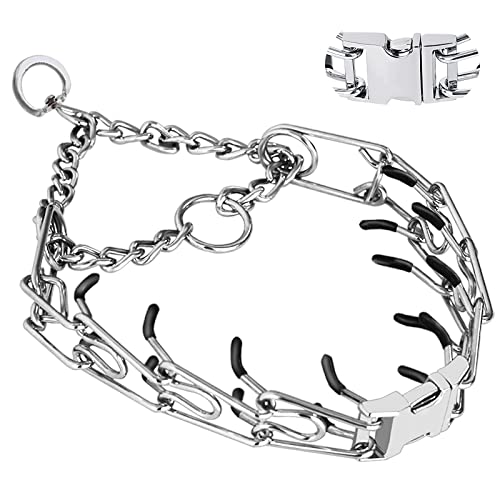
The Safiman collar emphasizes humane correction with a rounded head and smooth surface. It includes a front quick-release buckle and a set of eight directional links, designed to gain your dog’s attention from various angles. Rubber-covered caps add comfort, reducing irritation while teaching appropriate leash behavior. The design blends correction with comfort to facilitate learning during walks.
Monstoyo Martingale No Pull Collar

This heavy-duty nylon collar integrates a Martingale design with an inner stainless steel chain and a soft neoprene outer wrap. It provides slight tightening when the dog pulls, distributing pressure evenly around the neck. The dual-layer construction aims to withstand strong pulling while remaining comfortable and visible during training. Suitable for a range of dog sizes.
Supet Prong Collar For Dogs

The Supet no-pull training collar uses a humane design with a quick-release buckle. It includes extra links and emphasizes a gentle correction that mimics a mother dog’s correction. The collar’s rounded prongs and rubberized tips reduce friction and protect the dog’s neck while guiding behavior during leash walks and training sessions.
Herm Sprenger Prong Collar With ClicLock

This stainless steel training collar features a ClicLock quick-release mechanism and a 360-degree swivel ring to prevent tangling. It fits up to a 20-inch neck and allows length adjustments by removing or adding links (extras sold separately). The design aims to provide a reliable training tool with a flexible connection that reduces head-over-head installation discomfort.
Buying Guide: Key Considerations For Selecting A Prong Collar
- Size and fit: Measure your dog’s neck just below the ears and add about 2–3 inches to determine the collar length. Ensure a snug but not restrictive fit to allow comfortable movement and proper correction.
- Prong material and finish: Stainless steel prongs offer durability and corrosion resistance. Chrome plating can reduce surface wear. Look for smooth, beveled prong tips to minimize skin irritation.
- Link adjustability: Check how many links can be added or removed. Some collars allow multiple links, while others include adjustable ranges with fast-release mechanisms.
- Locking and comfort features: Quick-release buckles, ClicLock systems, and swivel rings help with easy application and reduce tangling during training.
- Training goals and safety: Prong collars should be used under professional guidance and as part of a broader training plan. Avoid over-tightening and monitor for signs of distress.
- Size compatibility: For large dogs, consider collars rated for necks up to 20 inches or more. For smaller breeds, select a narrower width to avoid excess pressure on delicate neck areas.
- Maintenance: Regularly inspect for worn links, rust, or sharp edges. Clean with mild soap and water after use to extend lifespan.
- Alternative options: If your dog responds poorly to prong corrections or has neck sensitivity, consider front-clip or head-collar alternatives and consult a trainer for behavior-based strategies.
Note: This article presents a comparative overview of selected products. Always follow the manufacturer’s sizing instructions and consult a professional trainer to ensure safe and effective use for your dog’s unique needs.