Finding the right dry dog food for a pug involves balancing flavor, muzzle shape, digestion, and coat health. This guide highlights premium dry options that align with pug-specific needs, including weight management, skin and coat support, and small-breed nutrient profiles. Below is a quick summary of five well-suited picks, with key benefits to help you compare at a glance.
| Product | Brand | Notable Benefit | Target |
|---|---|---|---|
| Royal Canin Pug Adult | ROYAL CANIN | Skin and coat support; breed-specific kibble | Adult Pugs |
| Royal Canin Pug Puppy | ROYAL CANIN | Antioxidants; small-breed kibble | Pug Puppies |
| Hill’s Science Diet Light | Hill’s Science Diet | Weight management; small kibble | Adult, weight-conscious |
| Optimeal Small Breed Lamb & Rice | Optimeal | High digestibility; balanced nutrition | Small breeds |
The following sections review each product in detail. Each pick focuses on nutrition tailored to a pug’s size, muzzle, and common health considerations, providing evidence on protein quality, digestion, and coat health without external price details.
Royal Canin Breed Health Pug Adult Dry Food
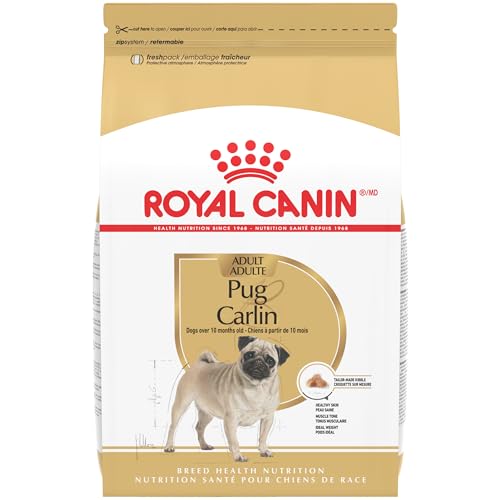
ROYAL CANIN’s Pug Adult formula targets purebred pugs aged 10 months and older. The crunchy cloverleaf kibble is designed to fit a Pug’s short, square muzzle, helping with chewing efficiency and portion control. This breed-health dog food emphasizes skin health, leveraging EPA and DHA from fish oil to support a healthy coat and skin condition. Suitable for everyday maintenance, it balances protein and fat to support lean body condition while addressing breed-specific needs.
Royal Canin Pug Puppy Dry Dog Food

This formula is formulated for purebred Pug puppies from 8 weeks to 10 months old, supporting healthy development. Its specialized kibble aids small dogs in picking up and chewing more easily, which is helpful for puppies still learning how to eat efficiently. The product includes an exclusive complex of antioxidants, including vitamin E, to support the puppy’s immune system as it grows. This is a good transitional option for new owners or growing puppies in the breed.
Hill’s Science Diet Light for Small Breeds

Hill’s Science Diet Light is designed for adult dogs with a focus on weight management. It features a low-calorie profile with L-Carnitine to support maintaining ideal body weight. The formula prioritizes high-quality protein and natural fibers to help reduce between-meal hunger, while omega-6 fatty acids and vitamin E promote a healthy skin and coat. The small kibble is suitable for smaller breeds, including pugs, and can support daily activity without excess calories.
Optimeal Small Breed Lamb & Rice

Optimeal Small Breed Lamb & Rice emphasizes fresh lamb as the first ingredient, delivering digestible protein with a pleasant taste for small dogs. The formula is designed to sustain energy for small breeds and supports healthy digestion with wholesome grains and prebiotic FOS. This option is suitable for adult small dogs needing a balanced daily diet with protein variety and an emphasis on digestibility.
Blue Buffalo Life Protection Formula Puppy

Blue Buffalo Life Protection Formula Puppy Dry Dog Food features real chicken as the first ingredient and is designed to support cognitive development and retinal health with DHA and ARA. This puppy-specific formula is free from poultry by-products, corn, wheat, and soy, aligning with quality standards often sought in premium puppy foods. The LifeSource Bits provide antioxidant support to help strengthen the immune system during early development.
Buying Guide: Key Purchase Considerations For Pug Food
- Life stage and weight management: Pugs commonly struggle with weight. Choose a formula aligned with age and activity level, including options with controlled calories or elevated protein to support lean mass.
- Kibble design for brachycephalic mouths: Small, easy-to-chew kibble shapes can improve eating comfort and reduce choking risk for pugs with their distinctive muzzles.
- Skin and coat health: Look for omega-3 and omega-6 fatty acids (EPA, DHA) to support coat shine and skin integrity, which are common pug concerns.
- Digestibility and protein quality: Select formulas with high-quality protein sources and added fiber or prebiotics to support digestion and stool quality.
- Allergens and sensitivities: If your pug shows GI sensitivity or skin irritation, consider grain-inclusive versus grain-free options and monitor ingredients for potential allergens.
- Puppy versus adult formulations: Puppies require different nutrient ratios, including higher energy density and antioxidants for immune development; transition gradually to adult formulas as your pug matures.
- Brand support and vet guidance: Reputable brands that offer breed- or life-stage specific lines can provide consistent nutrition. When in doubt, consult a veterinarian for tailored guidance.
Across the selections, the best choice depends on your pug’s age, weight, and health goals—from puppy development and weight management to skin health and digestion. Each option in this list provides targeted benefits aligned with common pug needs, backed by recognizable brands with breed-specific research and active ingredient profiles.