Choosing the right diet is crucial for dogs with pancreatitis and sensitive digestion. This article highlights low-fat, easily digestible options and explains how to compare products to support GI comfort, weight management, and overall wellbeing. Below is a quick buying guide and five top choices from reputable brands commonly recommended by veterinarians.
Summary of Selected Products
| Product | Format | Key Benefit |
|---|---|---|
| Hill’s Prescription Diet i/d Low Fat Dry | Dry Food | Low fat, highly digestible to settle fat-responsive upsets |
| Hill’s Prescription Diet i/d Low Fat Wet | Wet Food Cans | Supports digestion and nutrient absorption with low fat |
| Blue Buffalo Natural Veterinary Diet GI Gastrointestinal Support Low Fat Dry | Dry Food | Low-fat formula with real fish for gentle digestion |
| Purina Pro Plan Veterinary Diets EN Gastroenteric Low Fat Canine Formula | Wet Can Food | High digestibility with prebiotic support |
| Blue Buffalo Natural Veterinary Diet GI Low Fat Wet | Wet Can Food | Low fat with GI-supporting ingredients |
Hill’s Prescription Diet i/d Low Fat Dry Dog Food

Brand: HILL’S PRESCRIPTION DIET. This Veterinary Diet dry dog food is specially formulated to support digestive health. It is clinically tested to help settle fat-responsive digestive upsets and features a highly digestible, low-fat formula. It is designed for dogs requiring controlled fat intake without compromising palatability or nutrient absorption.
Hill’s Prescription Diet i/d Low Fat Digestive Care Wet Canine Food
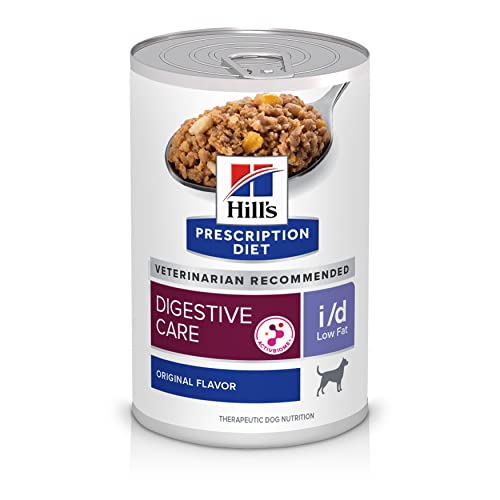
Brand: HILL’S PRESCRIPTION DIET. This wet option supports digestive health with a chicken flavor, designed to improve digestion, nutrient absorption, and lower blood fat levels. The low-fat formula uses highly digestible protein to minimize GI stress while maintaining palatability.
Blue Buffalo Natural Veterinary Diet GI Gastrointestinal Support Low Fat Dry

Brand: Blue Buffalo. This veterinarian-prescribed dry dog food features a low-fat formula aimed at dogs with delicate stomachs and fat digestion challenges. Real fish as a first ingredient supports digestibility and palatability while promoting GI comfort.
Purina Pro Plan Veterinary Diets EN Gastroenteric Low Fat Canine Formula

Brand: Pro Plan Veterinary Diets. This canned formula emphasizes high digestibility and low fat, with a prebiotic fiber to nourish a balanced GI microflora. It is designed to support dogs needing GI relief while providing essential nutrients.
Blue Buffalo Natural Veterinary Diet GI Low Fat Wet

Brand: Blue Buffalo. This wet GI formula is prescription-recommended and features real whitefish as a primary ingredient. It delivers low-fat nutrition with GI-supportive fibers to aid digestion and nutrient absorption in dogs with sensitive systems.
Buying Guide: Key Purchase Considerations For Pancreatitis And GI-Sensitive Dogs
Purpose and veterinary guidance matter most when selecting a pancreatitis-friendly diet. Consider these angles to compare options and find the best fit for your dog.
- Fat content and digestibility: Look for low-fat formulas and highly digestible proteins to minimize pancreatic workload and support nutrient absorption.
- Formula type: Dry kibbles can help with weight management and satiety, while wet options support hydration and palatability. Many dogs do well on a combination, under veterinary guidance.
- Sodium and mineral balance: Some pancreatitis plans require careful sodium control and mineral balance to support overall health; check label guidance and veterinarian recommendations.
- Digestive aids: Prebiotic fibers, resistant starch, and added omega fatty acids may aid GI microbiota and coat health, but use as directed by a vet.
- Prescriptions vs. over-the-counter: Veterinary diets with a prescription are designed for specific GI conditions and should be used under veterinary supervision for safety and effectiveness.
- Transition plan: When changing foods, transition gradually over 7–14 days to reduce GI upset. Mix increasing portions of the new formula with the current diet.
- Breed, age, and weight: Calorie density, protein level, and portion sizes should fit your dog’s life stage and activity level to prevent weight gain or loss.
- Palatability and texture: If a dog is picky, alternating between dry and wet options within vet-approved guidelines may improve acceptance without compromising health goals.
- Monitoring and follow-up: Regular veterinary check-ins help assess satiety, weight, stool quality, and pancreatitis markers. Adjust the plan as needed.
Each product listed above targets low fat, gentle digestion, and nutrient absorption, aligning with common veterinary strategies for pancreatitis management in dogs. Always consult with a veterinarian to tailor a plan to your dog’s medical history and current health status.