Choosing the right bottom feeder helps Bettas receive balanced meals while keeping tank water clean. This guide reviews five focused options that work well in most Betta setups, from simple feeding rings to dedicated feeding dishes and safe cave-style feeders. Each product is evaluated by design, ease of use, and how well it minimizes wasted food and debris in the tank.
Summary of selected products
| Product | Brand | Key Benefit | Type |
|---|---|---|---|
| DaToo Fish Feeding Ring | DaToo | Floating ring confines floating food for picky eaters and improves water clarity | Floating feeding ring |
| Pawfly 2 Pcs Feeding Ring | Pawfly | Two feeding zones to prevent fighting and reduce waste | Round and square feeding rings |
| Pawfly Aquarium Fish Feeding Dish Set | Pawfly | Glass dish with suction cups for precise feeding and easy cleanup | Feeding dish with suction cups |
| JZMYXA Magnolia Shaped Feeding Dish | JZMYXA | Acrylic, compact feeding dish with a cute magnolia shape | Feeding dish |
| HOZOE Aquarium Floating Betta Cave | HOZOE | Three-in-one habitat: cave, hammock, and feeder for stress reduction | Floating cave feeder |
DaToo Fish Feeding Ring

The DaToo floating feeding ring is designed to hold floating fish food, reducing debris spread and keeping the tank clearer. Made from safe materials, it supports picky eaters by concentrating food in a defined area while allowing other fish to feed in a controlled zone. Its ability to form multiple feeding zones can help reduce aggression among tank mates, especially in community setups. Ideal for Betta, goldfish, and similar small to mid-sized aquarium residents.
JZMYXA Magnolia Shaped Feeding Dish

This magnolia-shaped feeding dish provides a compact, high-clarity acrylic surface for controlled feeding. Its small footprint is suited for Betta tanks where space is limited, and its simple suction cup setup helps prevent floating food from dispersing. Aesthetic appeal pairs with practicality, making it a convenient choice for routine feeding in smaller aquariums.
Floating Betta Hide & Shrimp Cave

This all-in-one habitat combines a floating cave, hammock, and feeder, offering a safe resting spot while concentrating floating foods to reduce waste. Made from non-toxic PLA, the design aims to be aquarium-safe and water-friendly, promoting secure hiding spaces for Bettas and small shrimp while supporting feeding efficiency and stress reduction in a compact form factor.
Pawfly 2 Pcs Feeding Rings
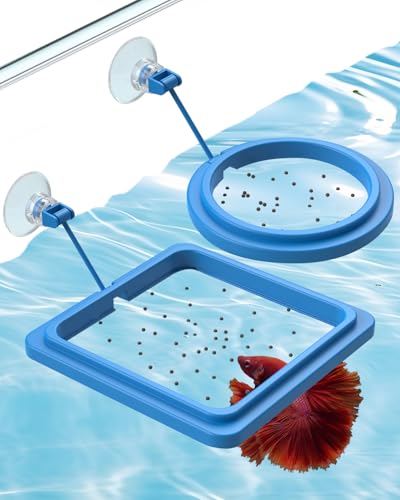
These round and square feeding rings are designed to create two concentrated feeding zones, helping prevent food fights and waste. They attach with a suction cup and float with the water level, making them compatible with most aquariums. The design minimizes food reaching filters and makes post-feeding cleanup easier by keeping leftovers contained in the ring.
Petbank Automatic Fish Feeder

Petbank’s feeder focuses on precision and moisture resistance with 16 grids to cover multiple meals. It supports different food types and offers two installation methods, including clamps or suction cups. The fully sealed design helps prevent moisture-induced clogs, a common concern with dry pelleted foods. This model suits automated feeding routines for Betta tanks and small community setups where consistency matters.
Buying Guide: Key Considerations For Choosing A Bottom Feeder
- Feeder Type and Compatibility: Decide between a feeding ring, dish, or cave-style feeder. Consider tank size, water flow, and how much space is available at the bottom. Rings work well for floating foods; dishes and caves suit compact layouts and prevent debris spread.
- Food Type And Feeding Volume: Check that the feeder supports the type of food you use (pellets, flakes, freeze-dried, or small live foods). Look for adjustable portions or multiple feeding zones to tailor portions to your Betta’s appetite.
- Material Safety and Water Quality: Choose non-toxic, aquarium-safe materials (PLA, acrylic, PVC). Ensure the product does not release residues or alter water chemistry. A waterproof, moisture-resistant design helps prevent mold and clogs in automatic feeders.
- Ease Of Installation And Cleaning: Suction cups and simple mounting should fit your tank without tools. Dishes and rings should be easy to remove for quick cleaning to maintain good water quality and reduce algae growth.
- Aggression Management: Multiple feeding zones or separate compartments can reduce feeding battles among tank mates. This is particularly helpful in Betta-dominated tanks or communities with active feeders.
- Maintenance Frequency: Consider how often you’ll need to refill, clean, and inspect the feeder. Automated feeders add convenience, but require periodic checks to ensure even dispensing and no jams.
- Tank Setup And Aesthetics: Some feeders double as decorative elements (caves, hammocks) that blend with the tank’s theme. Choose designs that won’t snag fins or trap debris in hard-to-clean nooks.
When selecting a bottom feeder, balance practicality with the specific needs of your Betta and tank mates. For active community tanks, a combination of a feeding ring and a dish can provide reliable feeding zones while keeping the substrate and filter clear. For solo Bettas, a compact feeding cave or magnolia-shaped dish offers a focused feeding spot with minimal footprint. Always monitor your Betta’s response to new feeding tools and adjust feeding routines as needed to preserve water quality and health.