Geckos and other tropical reptiles require substrates that maintain humidity, support natural burrowing, and minimize waste buildup. The following bedding options are popular among reptile keepers for their moisture retention, odor control, and ease of maintenance. This guide highlights five top substrates chosen for geckos, bearded dragons, snakes, tortoises, and frogs, with objective notes on their best-use scenarios and how they help support healthy, stress-free enclosures.
Summary of chosen products:
- Sukh Sphagnum Moss for Reptiles – Terrarium Reptiles Moss Green Dried Peat Moss Habitat Bedding Moss
- ZeeDix 2 Pack Coconut Fiber Substrate
- Halatool 2Pack Leopard Gecko Substrate Natural Coconut Fiber Substrate
- Legigo 10LBS Coconut Chip Substrate for Reptiles
- LEOLIO Bearded Dragon Tank Accessories Reptile Carpet Mat
Sukh Sphagnum Moss For Reptiles

This sphagnum moss provides high moisture retention, supporting tropical environments that need stable humidity. It helps maintain moisture over extended periods and can stabilize enclosure humidity, reducing rapid drying of the substrate. Its soft texture also supports natural burrowing and nest-like behavior, making it suitable for species that require a moist surface for shedding or egg-laying.
While moss is excellent for humidity, it should be used as part of a mixed substrate for many species. It offers hiding spots and nesting material, aiding natural behaviors and shedding. For some reptiles, peat moss alone is not a primary substrate; combining moss with other substrates improves comfort and helps with moisture balance in terrariums.
ZeeDix Coconut Fiber Substrate, 2 Pack
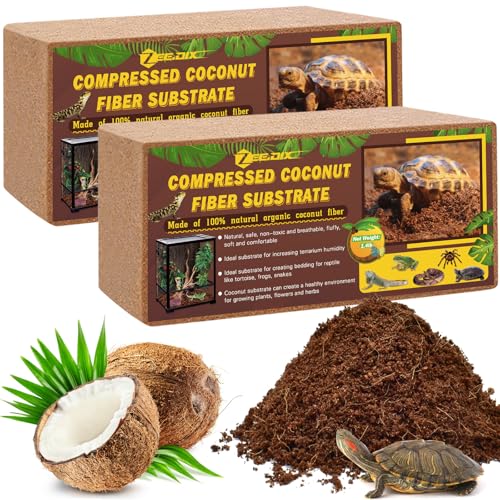
This substrate comes in two packs of coconut fiber bricks, designed for bedding and general enclosure cleanliness. It is 100% natural, breathable, and balanced for low EC and pH. It breaks down naturally after use and can be disposed of in a garden. The product also offers odor and waste absorption, helping to keep enclosures fresh between cleanings.
Ideal for a variety of reptile habitats, coconut fiber substrates promote aeration and help maintain humidity without becoming overly damp. They are versatile for geckos, tortoises, bearded dragons, and other moisture-tolerant species. For some setups, washing before use improves worm compatibility and overall safety.
Halatool Leopard Gecko Substrate Natural Coconut Fiber

Halatool’s leopard gecko substrate uses two coconut husk fiber bricks intended to fill a small terrarium, providing a safe, organic bedding option. Humidity is optimized around 60-80%, supporting shedding and natural behaviors while maintaining aeration to reduce moisture buildup. The substrate is designed to minimize dirt and foreign substances, offering a clean habitat for sensitive reptiles.
Odor control and waste management are emphasized, helping to reduce daily cleaning demands. This option is best for gecko and similar reptile enclosures that require a breathable, absorbent substrate with sustainable composition. It is typically used as part of a mixed substrate approach rather than a sole bedding solution for most species.
Legigo Compressed Coconut Fiber Substrate — 2 Pack

This product includes two compressed coconut fiber bricks designed for reptile terrarium bedding. Made from natural coconut fiber, it offers breathability and humidity maintenance suitable for a range of reptiles. It decomposes naturally after use, reducing environmental impact, and has odor-absorbing properties to help keep enclosures smelling fresh.
The texture supports natural digging and burrowing without sharp edges, making it a good fit for ball pythons, geckos, and small tortoises. Regular moisture checks are recommended to keep humidity at desired levels, especially in drier rooms or climates.
LEOLIO Reptile Carpet Mat For Tank Flooring

This bearded dragon tank accessory is a non-adhesive reptile carpet liner designed to cover large areas in a tank. The extra-long mat provides broad coverage for bigger enclosures, is easy to trim, and features a non-stick surface to prevent claw entanglement. The material retains heat and offers a stable, non-abrasive surface that helps reduce slipping and joint stress.
While not a substrate itself, a reptile carpet mat can complement bedding choices by providing a dry, easy-to-clean surface in areas where moisture is not required. It is particularly useful for heat management and enclosure sanitation in bearded dragon and gecko habitats when combined with other substrates that maintain humidity elsewhere in the enclosure.
Legigo 2 Pack Compressed Coconut Fiber Substrate
This 2-pack offers compressed coconut fiber bricks, similar to the single-pack option but in a dual-pack configuration. It emphasizes natural material safety and odor management, with a focus on providing a breathable, humidity-friendly environment for reptiles and amphibians. The substrate supports safe digging and burrowing and is designed to be environmentally friendly through natural decomposition.
Buying Guide: Key Purchase Considerations
- Humidity needs: Reptiles from tropical climates typically require higher humidity. Substrates like sphagnum moss and coconut fiber blends help maintain moisture without oversaturation.
- Species-specific behavior: Some geckos and snakes benefit from a mixed substrate that includes a moisture-retentive layer and a drier top layer for burrowing and waste management.
- Substrate safety: Look for 100% natural materials with no added chemicals. Organic coconut fiber and sphagnum moss are common choices, but avoid products with dyes or fragrances that could irritate reptiles.
- Maintenance and cleanup: Odor absorption and ease of cleaning are important. Substrates should reduce daily maintenance while supporting natural behaviors.
- Environmental impact: Choose substrates that decompose naturally and can be disposed of in a garden or compost where appropriate.
- Combined approaches: Many enclosures benefit from a mixed-substrate strategy—using a moisture-retentive base with a drier top layer to balance humidity and digging.
- Terrarium size and humidity zones: For larger tanks, consider carpet liners for dry zones and a suitable substrate layer in humidity-prone areas to create microhabitats inside the enclosure.
The bedding options above are presented to help balance hydration, comfort, and natural behaviors for geckos and other reptiles. When selecting substrates, consider the enclosure climate, species-specific needs, and maintenance routines to create a stable, healthy habitat.