Automated turtle feeders help keep pet turtles well-fed when schedules get busy, travel is involved, or days at work stretch longer than expected. The following picks emphasize reliability, moisture protection, and flexible feeding schedules suitable for turtles and other aquatic pets. Each option supports different tank sizes, power setups, and feeding modes to fit a variety of setups. Read on to compare features and find the best fit for your tank.
| Product | Brand | Key Benefit |
|---|---|---|
| Aoyar Automatic Fish Feeder Dispenser | Aoyar | Moisture-proof, 200ml capacity, 3 feeding modes |
| Petbank Automatic Fish Feeder | Petbank | 16-grid precision, two installation methods |
| DXOPHIEX Automatic Fish Feeder (Non-WiFi) | DXOPHIEX | Battery + USB power, dual mounting options |
| JuzPetz Automatic Fish Feeder | JuzPetz | 4 daily feedings, adjustable amount, versatile for turtles |
| FREESEA Automatic Fish Feeder | FREESEA | Manual and automatic modes, moisture-resistant design |
These products are selected for American households with small to mid-size turtle tanks and mixed aquatic setups. When choosing, prioritize moisture resistance, a capacity that suits your typical vacation length, and a mounting option that fits your tank’s hood or rim. Consider battery and USB power redundancy for travel. The following sections detail each option with practical insights from their listed features.
Aoyar Automatic Feed Dispenser for Aquariums

The Aoyar feeder offers three fixed interval modes, enabling automated feeding every 8, 12, or 24 hours, with a manual feeding option for immediate needs. This flexibility can help maintain a turtle’s dietary routine during irregular schedules. An adjustable slider controls portion size, helping prevent overfeeding—especially useful for small to mid-sized tanks. The 200ml capacity is designed for longer trips, reducing the need for frequent refills. A notable moisture-proof lid minimizes moisture exposure, keeping dry food and pellets fresh and clump-free. This design aims to reduce waste and support consistent feeding, even when you’re away from home.
Pros: Simple operation, reliable scheduling, moisture protection for dry foods. Cons: Some users may need to experiment with portion settings for different turtle diets; large pellets may require smaller meals or a different food type. Best uses include small to medium tanks and routine, planned trips.
Petbank Automatic Feeder With Moisture Shield

Petbank emphasizes precise portion control with a multi-grid design that holds up to 16 meals, distributing small amounts to prevent overfeeding. This approach can be advantageous for turtles that benefit from multiple small feedings across a day. The feeder supports two installation methods: a clamp base for open-tank setups or suction cups for tank covers. A key moisture-resistant feature ensures the entire unit stays dry and functional, reducing the likelihood of jams. It works with a variety of foods, including pellets, powders, and granules, making it versatile for different turtle diets. Note that it’s not intended for shrimp or flakes.
Pros: High feeding precision, flexible mounting, moisture resistance. Cons: Not suitable for all food types; may require careful food selection to match the 2g per grid capacity. Ideal for controlled, scheduled feeding in medium tanks.
DXOPHIEX Automatic Feeder (Non-WiFi)

DXOPHIEX presents a dependable non-WiFi option with easy-to-program cycles: 8, 12, or 24 hours, plus manual feed. It supports two power sources: simple AA batteries or USB power, with the USB option as the default and batteries as a backup to ensure feeding continuity during outages. The dual mounting options accommodate tanks without a hood or with a hood, making it adaptable for turtle tanks that require corner mounting or edge placement. The design emphasizes reliable power delivery and flexible installation, helping maintain a regular feeding pattern for turtles while away from home.
Pros: Flexible power options, straightforward operation, adaptable mounting. Cons: Battery life may vary with use; ensure fresh batteries for long trips. Best for users who want a straightforward, dependable feeder without network requirements.
FISHNOSH Automatic Feeder for Aquariums

The FISHNOSH unit is designed for stress-free feeding with up to 9 feedings per day in its newer generation. It is suitable for small tanks, larger aquariums, and ponds, and supports turtle and fish diets alike. The programmable system allows three meals daily with a single cup rotation per feeding, which can help create a predictable routine for a turtle that benefits from daily consistency. The design emphasizes user-friendly operation and clear setup directions, so caregivers can prepare a reliable schedule quickly. Note that the model emphasizes a simple interface rather than a display screen.
Pros: Flexible daily schedule, broad tank compatibility, straightforward setup. Cons: Some users may prefer a higher capacity for longer trips; ensure the provided cup rotation aligns with your turtle’s feeding needs.
FREESEA Automatic Feeder With Manual and Auto Modes
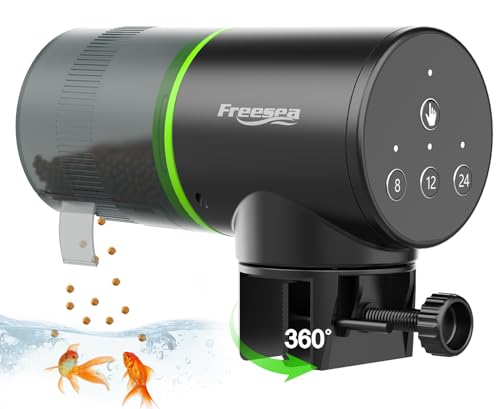
FREESEA provides both manual and automatic modes, offering 8, 12, and 24-hour presets for regular feeding intervals. This dual-mode capability is useful for turtle owners who want to ensure a quick, on-demand feeding option while still relying on a scheduled routine during trips. The unit supports adjustable feeding amounts, enabling users to control portions based on the number and size of pets. A moisture-resistant design helps keep food dry and fresh, reducing the chance of clogging when dealing with pellets, flakes, or strips. It’s a practical choice for turtle tanks where flexible feeding control is valued.
Pros: Dual modes, adjustable portions, moisture protection. Cons: Some setups may require additional mounting adaptors. Best used in moderately sized tanks where periodic, controlled feedings are desired.
Buying Guide: Key Considerations for Automatic Turtle Feeders
- Power options and reliability: Look for units with USB power plus battery backup to ensure continued feeding during outages or travel. Dual power sources reduce the risk of a hungry turtle.
- Moisture protection and food compatibility: A moisture-proof lid and sealed design prevent clumping, jams, and mold. Ensure the feeder supports the food types you use (pellets, granules, powders, strips).
- Capacity and meal planning: 200ml capacity is common and suitable for short trips; larger tanks or longer vacations may require higher capacity or multiple feeders. Check whether the device supports multiple daily feedings and adjustable portion sizes.
- Mounting compatibility: Choose a model with mounting options that fit your tank configuration—edge mounting, hood mounting, or suction-based on tank covers. This ensures stable operation around a turtle’s vigorous activity.
- User interface and programming: Simple, intuitive controls reduce setup time and errors. Some models offer app control or timers with multiple daily feedings; others rely on manual programming.
- Food type versatility: Consider whether the feeder accommodates pellets, flakes, powders, or floating foods. For turtles, a mix of pellets and occasional greens or treats may be desirable; ensure compatibility.
- Maintenance and cleaning: Look for easy-to-clean designs with accessible openings and minimal parts. Moisture seals should be maintained to prevent leaks and food exposure to moisture.
When selecting an automatic feeder for a turtle, match the device to your tank size, feeding routine, and travel frequency. A unit with moisture resistance, flexible power options, and straightforward setup tends to deliver the most reliable, low-effort results for everyday care and holiday coverage.